Open this weekend, 10:00–16:00 Cape Solander Road, Kurnell NSW

Kurnell · Kamay Botany Bay · Established 1996

A decommissioned lighthouse, still lit by volunteers.

The Cape Solander Light was switched off in 1989 after 119 years of service. In 1996, forty-one locals climbed its ninety-six steps with brooms and rust remover and decided the tower deserved better. Today we restore the 1868 lantern, turn its original lens for visitors, and run the keeper's cottage as a museum of the people who watched this coast.

  • Open Saturdays & Sundays, 10:00–16:00
  • Tower tours every hour
  • Members tour free
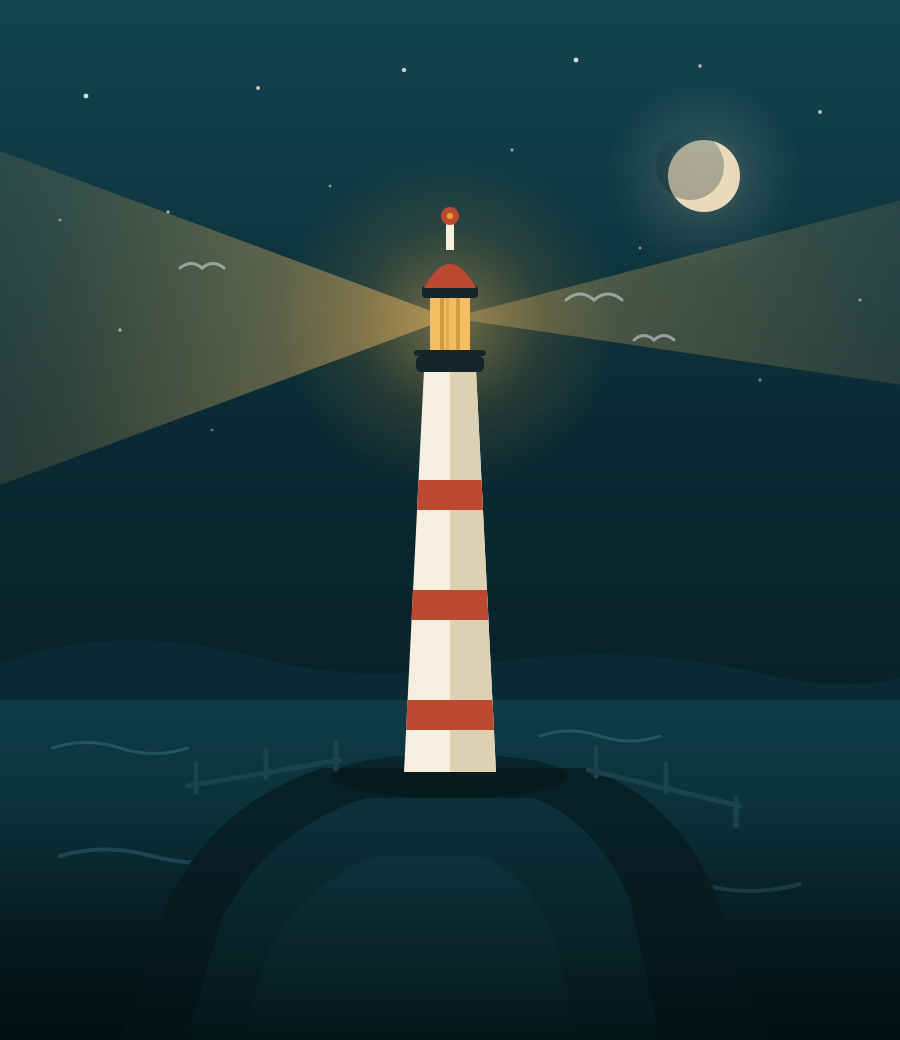
Illustration of the Cape Solander lighthouse at dusk: a white tower with red bands standing on the headland, its lantern lit and a beam sweeping west across the water beneath a rising moon.
The light at dusk, from the south boardwalk
1870 First lit on 1 October, with a second-order Fresnel lens
96 Cast-iron steps from the door to the lantern room
312 Volunteer hours given to the cape each week
22nm Range of the original light in clear weather

Who we are

A society of keepers, not a museum of objects.

We are 214 volunteers: a heritage engineer, two retired lighthouse keepers, a marine biologist, a retired schoolteacher who runs the archive, and a very patient bookkeeper. Nobody here is paid. What we are paid in is the view from the gallery rail on a clear morning.

Restore

We repair the tower the way it was built: local sandstone, lime mortar, cast iron, and no shortcuts. Our conservation plan is signed off by the state heritage office, working bees meet on the second and fourth Saturday of the month, and every dollar we spend is listed in the annual report.
Keep watch

The head light is decommissioned, but the cape still needs watching. We keep a daily weather log, count humpbacks on the winter migration, record erosion along the cliff track, and report anything on the headland that should not be there.

Share it

Tours, school groups, the museum and The Beam, our quarterly letter. We would rather explain why a Fresnel lens was a revolution in its day than let the tower become scenery that people photograph and never think about again.

“A lighthouse is only ever half a building. The other half is the people who agree to look after it.”

How we got here

One hundred and fifty-five years on the same piece of rock.

The cape has been a landmark for longer than it has been a building. This is the short version, drawn from the logbooks, the State Records files, and the memories of three families who still live in the district.

  1. 1770

    A name from the Endeavour

    Daniel Solander, the botanist aboard HMS Endeavour, sights the headland while the ship lies off what is now Kurnell. The cape carries his name from that week onward. The Gweagal people, who had been naming this coast for tens of thousands of years, already had names for it.

  2. 1857

    The petitions

    After three colliers are lost on the run south of Botany Bay in a single winter, forty-one shipmasters petition the colonial government for a light on the cape. The petition is refused twice and granted on the third attempt.

  3. 1868

    Quarrying begins

    A crew of fourteen quarries sandstone on the headland itself and raises the tower over two years. The stone never travelled more than four hundred metres, which is why the tower still matches the cliff it stands on.

  4. 1870

    First light, 1 October

    The keeper ignites the lamp behind a second-order Chance Brothers Fresnel lens at dusk. The light is visible twenty-two nautical miles out and burns four hundred gallons of kerosene a year.

  5. 1902

    Electric

    Kerosene gives way to a carbon-arc lamp driven by a generator in the yard. The keepers, who had spent their evenings winding the clockwork that turned the lens, suddenly had an evening free.

  6. 1942

    Wartime watch

    With Japanese submarines operating off the New South Wales coast, a twenty-four hour watch is kept from the gallery. The 1942 log is the most requested item in our archive, mostly by school students who cannot quite believe a lighthouse was used for spotting ships.

  7. 1989

    Dark

    On 30 June the light is decommissioned. A modern automated beacon on a steel tower takes over the work, and the 1868 tower is fenced, locked and left to the weather.

  8. 1996

    The Society forms

    Forty-one residents meet in the Kurnell surf club rooms and form the Cape Solander Lighthouse Society. Their first working bee clears seven years of salt and bird lime from the lantern room floor.

  9. 2004

    The tower reopens

    After eight years of repointing, glazing and a great deal of scaffolding, the public climbs the tower again for the first time since 1989. The first visitor through the door is a keeper's daughter, aged eighty-one.

  10. 2011

    The keeper's cottage becomes a museum

    Three rooms of the rebuilt 1931 cottage open as a museum, holding the logbooks, the brasswork, the original clockwork winding gear, and photographs lent to us by keeper families.

  11. 2023

    The lantern room, restored

    Twelve months of reglazing and brasswork return the lantern room to its 1870 appearance, with the original lens standing on its pedestal where it spent 119 years turning.

  12. Today

    Three hundred and twelve hours a week

    Guides, gardeners, archivists and engineers keep the tower, the museum and the cliff track open. The beacon offshore is automatic; the cape is not, and never has been.

Tours & museum

Climb the tower. Meet the lens. Ask us anything.

Tours leave every hour, on the hour, from 10:30 to 15:30 on Saturdays and Sundays. Each group is capped at twelve people so that everyone gets a turn at the gallery rail. Booking ahead is cheaper than paying at the gate — and it means we can email you before you drive out if weather has closed the tower.

Most popular

Guided tower tour

Up the spiral stairs to the lantern room, where the original 1870 Chance Brothers lens stands on its pedestal. Our guides are volunteers who have spent years with this building — ask one about the 1942 watch log and they will talk until the next group arrives at the door.

  • 50 minutes, including the gallery
  • 96 steps, no lift, sturdy shoes
  • Maximum 12 people per group
  • Weather permitting

$18 adult · $14 concession · $9 child

Entry by donation

Keeper's cottage museum

Three rooms of the rebuilt 1931 keeper's cottage: logbooks you can read in the original handwriting, brass fittings polished by a century of hands, the clockwork winding gear that turned the lens, and photographs lent to us by keeper families.

  • 30–45 minutes, come and go
  • Step-free entry from the car park
  • Children get a Junior Keeper card and a torch
  • Small shop: books, prints, postcards

Free donations welcome · $2 op-shop books

First Friday, monthly

Night watch

We relight the lantern with a modern lamp for the evening, then walk the clifftop with the cape's history in one ear and the sea in the other. The night finishes with billy tea and damper in the cottage kitchen.

  • 90 minutes, after sunset
  • Maximum 24 people
  • Torch and blanket provided
  • Recommended for ages 10 and up

$26 adult · $15 teen · members free

Admission and tours
Ticket Price
Guided tower tour — adult$18
Guided tower tour — concession (student, senior, companion card)$14
Guided tower tour — child (5–15)$9
Family ticket (2 adults, up to 3 children)$45
Night watch — adult / teen$26 / $15
Keeper's cottage museumBy donation
Schools & groups (10+), weekdays by arrangement$12 pp
Society membersFree

Booking and weather

Book online up to the morning of your visit, or ring the cottage on (02) 9668 4412. Groups of ten or more can book a weekday tour with a dedicated guide and a talk in the museum.

The tower closes in high wind, lightning, or on total fire ban days. We cancel early and refund in full — nobody should drive two hours to stand in a car park. If the tower is shut, the museum and the clifftop track stay open and admission is free.

Prices include GST. The Society is a registered charity; tour income goes straight into the conservation fund.

In the collection

The lens is the reason.

Before 1822, lighthouses were mirrors and candles doing their best. Then Augustin-Jean Fresnel worked out that a shell of concentric glass prisms could bend a single lamp into a beam that carried for miles. Our second-order lens — two metres tall, weighing just under a tonne — is one of fewer than a dozen surviving in the country.

  • The 1870 Chance Brothers Fresnel lens, on its original pedestal
  • Clockwork winding gear and the weights that drove the rotation
  • Fourteen keeper logbooks, 1870–1989, readable at the table
  • The 1942 wartime watch log and the sighting telescope
  • Photographs, letters and a keeper's uniform lent by three families
  • A digital archive of 7,400 scanned pages — 30% complete and growing
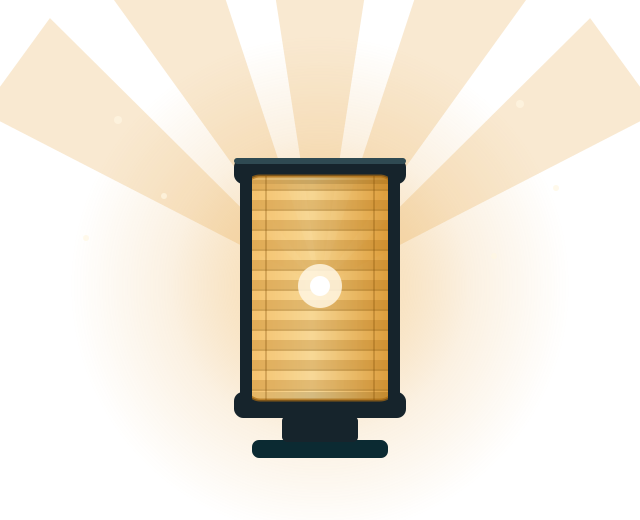
Illustration of the second-order Fresnel lens: a brass-framed drum of stacked glass prisms throwing a fan of amber light.
The second-order lens, drawn from our conservation survey. Visitors can look, but not touch — the glass is 155 years old.

The light itself

The numbers on the tower.

We relight the lantern for tour evenings, night watches and memorial services, using a modern lamp rated at a fraction of the old burner. The original optic stays on its pedestal in the lantern room. Everything else you can read off the building.

Why it went dark

By the late 1980s the tower's work had been done for decades by radar, radio and satellite. The light was maintained, not needed. In 1989 the Commonwealth handed the building to the state, switched the lamp off, and installed an automatic beacon on a steel tower a kilometre offshore — which still flashes today, unattended, to a rhythm the 1868 keepers would recognise.

What the automated beacon cannot do is explain itself. That is the part we have taken on.

Tower height
22 metres, 96 cast-iron steps Light 63 metres above sea level
Built
1868–1870, local sandstone with lime mortar
First lit
1 October 1870 Kerosene lamp, hand-wound rotation
Optic
Second-order Fresnel lens, Chance Brothers, Birmingham Now displayed in the lantern room
Original range
22 nautical miles in clear weather
Decommissioned
30 June 1989 Replaced by an automated offshore beacon
Heritage listing
State Heritage Register since 1999
In our care since
1996 — restored and reopened to the public in 2004

Our work

What your visit pays for.

Conservation here happens in small increments — a square metre of repointing, a pane of glass, a page of a logbook scanned and described. This is the current register, updated each quarter. Percentages are physical work completed, not money raised.

  • Lantern room reglazing and brasswork 100% · 2023

    Twelve months of work, 118 panes of glass, and a great deal of Brasso. Complete.

  • Tower render and sandstone repointing 82%

    The north face is done; the seaward face is next, which means scaffolding on the cliff side.

  • Keeper's cottage roof, gutters and joinery 64%

    New corrugated iron laid; window sashes being repaired off-site by a volunteer carpenter.

  • Cliff track, boardwalk and jetty steps 45%

    Boardwalk replaced out to the lookout; the descent to the jetty steps is closed until the erosion matting is finished.

  • Archive digitisation — logbooks and plans 30%

    2,220 of 7,400 pages scanned, transcribed and described. Every page is checked twice.


How we're accountable

Our annual report lists every project, its cost, and the volunteers who did the work. It is published each September and posted on the museum door as well as online. The conservation plan is public — if you want to read the specification for the mortar mix, we will send you the PDF.

Working bees

Second and fourth Saturday of every month, 8:00–12:00, followed by a barbecue. Bring gloves and a hat; we provide tools, training, sunscreen and something to eat. No experience needed, and there is always lighter work for anyone who wants it.

Support in kind

We are grateful to the local builders who lend scaffolding, the divers who survey the jetty footings, the signwriter who repainted the tower door lettering in gold leaf, and the three schools who raise money for a new pane each year.

In their words

What people say after they have been up the steps.

My grandfather kept this light from 1951 to 1968. I had never been inside it. I stood at the gallery rail for twenty minutes and did not say anything at all.
Margaret ElleryVisitor, Kurnell · tower tour, 2025
The guide showed us the winding weights and explained that someone had to wind this every two hours, all night, every night, for a hundred years. My Year 5 class has not stopped talking about it.
Daniel OkonjoTeacher, Sylvania Heights Public School
I joined to help with the painting and ended up in the archives. I have read a hundred years of weather written in other people's handwriting and I still find pages that surprise me.
Ruth BaxterVolunteer archivist, since 2009

Plan your visit

Getting there, and what to expect.

The lighthouse sits at the end of Cape Solander Road, inside Kamay Botany Bay National Park — about 45 minutes from the Sydney CBD and about 90 from Wollongong. There is no fuel and no café on the headland, so come prepared.

Opening hours

  • Museum & groundsSat & Sun, 10:00–16:00
  • Tower toursHourly, 10:30–15:30
  • Night watchFirst Friday, monthly
  • Night watch start19:30 Apr–Sep · 20:30 Oct–Mar
  • WeekdaysGroups by arrangement

Closed Christmas Day and Boxing Day, and on total fire ban days declared by the Rural Fire Service.

Getting here

Cape Solander Lighthouse
Cape Solander Road, Kamay Botany Bay National Park
Kurnell NSW 2231
  • Free car park, 60 m from the museum door
  • Bus 987 from Cronulla stops at Kurnell; 3 km walk or taxi from there
  • Park entry is free; the gate opens at 7:00 and closes at sunset
  • No fuel, no café — water and a picnic are a good idea

Access and comfort

Tower: 96 steps, no lift

The tower stairs are narrow, the doorway at the top is low, and there is no lift. Visitors need to manage steep, winding steps and to be steady on their feet; we are happy to carry your bag.

Museum & grounds: step-free

The museum, shop, toilets and picnic area are step-free from the car park, with an accessible toilet beside the cottage. Assistance dogs are welcome everywhere, including up the tower.

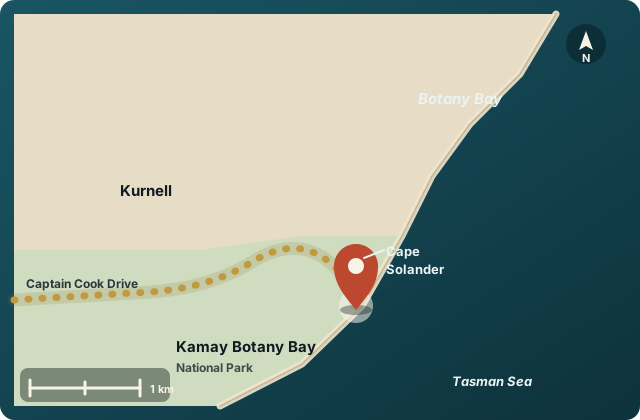
Simplified map of Cape Solander at the tip of the Kurnell peninsula, showing Captain Cook Drive leading to the lighthouse car park, Botany Bay to the north-west and the Tasman Sea to the south-east.

Before you drive out

The headland is exposed and the weather here is its own thing. Check this page or ring the cottage on the morning of your visit; if the tower is closed for wind we will tell you plainly rather than let you find out at the gate.

Dogs are welcome on the grounds and the cliff track but not inside the museum or up the tower. Photographs are fine, and if you are selling them, a donation to the conservation fund is the going rate.

Join the society

Members keep the doors open.

Membership is the quiet, dependable income that lets us plan work a year ahead instead of a month. It also gets you up the tower whenever you like, for as long as you like.

Lantern

$45 / year

For one person.

  • Unlimited tower tours for one
  • The Beam posted four times a year
  • 10% off everything in the museum shop
  • A vote at the annual general meeting
Join as Lantern

Solander Circle

$500 / year

For patrons and local businesses.

  • Everything in Keeper
  • Two guest passes for every public tour
  • An annual conservation briefing with our heritage engineer
  • Your name on the 1870 donor wall in the museum
  • First refusal on sponsoring a named restoration
Join the Circle

Membership runs for twelve months from the day you join. Concession rates are available for students, seniors and health-care card holders — just ask, we will never make it awkward. The Society is a registered charity; memberships of $2 or more are tax deductible.

Support the restoration

Every dollar has a job.

$150 of the conservation fund repoints roughly one square metre of tower. $25 buys a month of resin, gloves and dust masks for the working bees. $600 pays a diver to survey the jetty footings for an afternoon.

$25 $150 $600 Other

We publish where it went. The annual report lists every project and every cost, and the conservation plan is open to anyone who asks for it.

What we need right now

  • Tour guides — training provided, two half-days a month
  • A volunteer with a boat licence for jetty surveys
  • Someone who enjoys transcribing 19th-century handwriting
  • A bookkeeper for four hours a month
  • Gardeners for the cottage beds and the foreshore
  • A sponsor for the seaward-face scaffolding

Training is free. The view is the payment.

Questions we get asked

The practical answers.

Do I need to book, or can I just turn up?

You can turn up. The museum is drop-in and the tower takes walk-ups when there is room in the next group. On long weekends and in school holidays the midday tours fill by 11:00, so booking ahead is the safer bet — and it is $3 cheaper per adult.

Is the lighthouse actually working?

No — it was decommissioned in 1989 and a modern automated beacon a kilometre offshore does the work now. We relight the lantern with a modern lamp for tour evenings, night watches and memorial services, so you may well see it lit, but nothing in the tower is running for navigation.

Can I get up the tower with a wheelchair or a pram?

Not up the tower — it is 96 narrow spiral steps inside a 19th-century structure with no lift, and we will not pretend otherwise. The museum, shop, toilets and picnic area are all step-free from the car park, and the clifftop boardwalk is level for its first 400 metres. The museum has a large-print guide, a photographic tour of the lantern room, and a recorded audio version of the exhibit text.

What happens if the weather turns?

The tower closes in high wind, electrical storms and on total fire ban days. We cancel as early as we can and refund tickets in full. If the tower is shut, the museum, shop and clifftop track remain open and admission is free.

Is there anywhere to eat?

There is no café on the headland. There are picnic tables, a sheltered barbecue area and drinking water at the cottage, and Kurnell village is about five minutes' drive back up the road. The night watch includes billy tea and damper, which is genuinely the best part.

Can we bring a school group?

Yes, and it is one of our favourite things to do. Weekday school tours run with a dedicated guide, a talk in the museum and an activity sheet, at $12 per student with one supervising adult free per eight students. Email bookings@capesolanderlight.org.au and tell us the year group and what you are studying.

Can I photograph the lighthouse, or fly a drone?

Photographs for personal use are always fine, and we are happy for you to sell them — a donation to the conservation fund is the going rate. Drones need permission from the national park and must stay clear of the tower and the seabird colonies on the cliff, so please ask us first.

How do I volunteer, and what do I need?

Email volunteers@capesolanderlight.org.au or come to a working bee on the second Saturday of the month, 8:00 at the cottage. Bring closed shoes, a hat and gloves. We provide training, tools, insurance, and a barbecue at midday. There are indoor roles for anyone who would rather not be on the tools.

Is my donation tax deductible?

The Society is a registered charity with deductible gift recipient status; donations of $2 or more are tax deductible and we issue a receipt by email. Our ABN is 41 619 774 208, and our annual report is published every September.